Home · Plan your trip · Our huskies
Dog welfare
Our huskieshow they live
Travellers often ask us whether dog sledding is good for the dogs. It is a fair question. Here is how our 46 Alaskan and Siberian huskies live, work and retire.
Home · Plan your trip · Our huskies
Dog welfare
Travellers often ask us whether dog sledding is good for the dogs. It is a fair question. Here is how our 46 Alaskan and Siberian huskies live, work and retire.
Most of our dogs were born at our house; some came from other kennels that needed to find them a new home. Once a dog joins the team, it stays with us for life. Our team descends from Bertrand’s very first husky, Kowey.
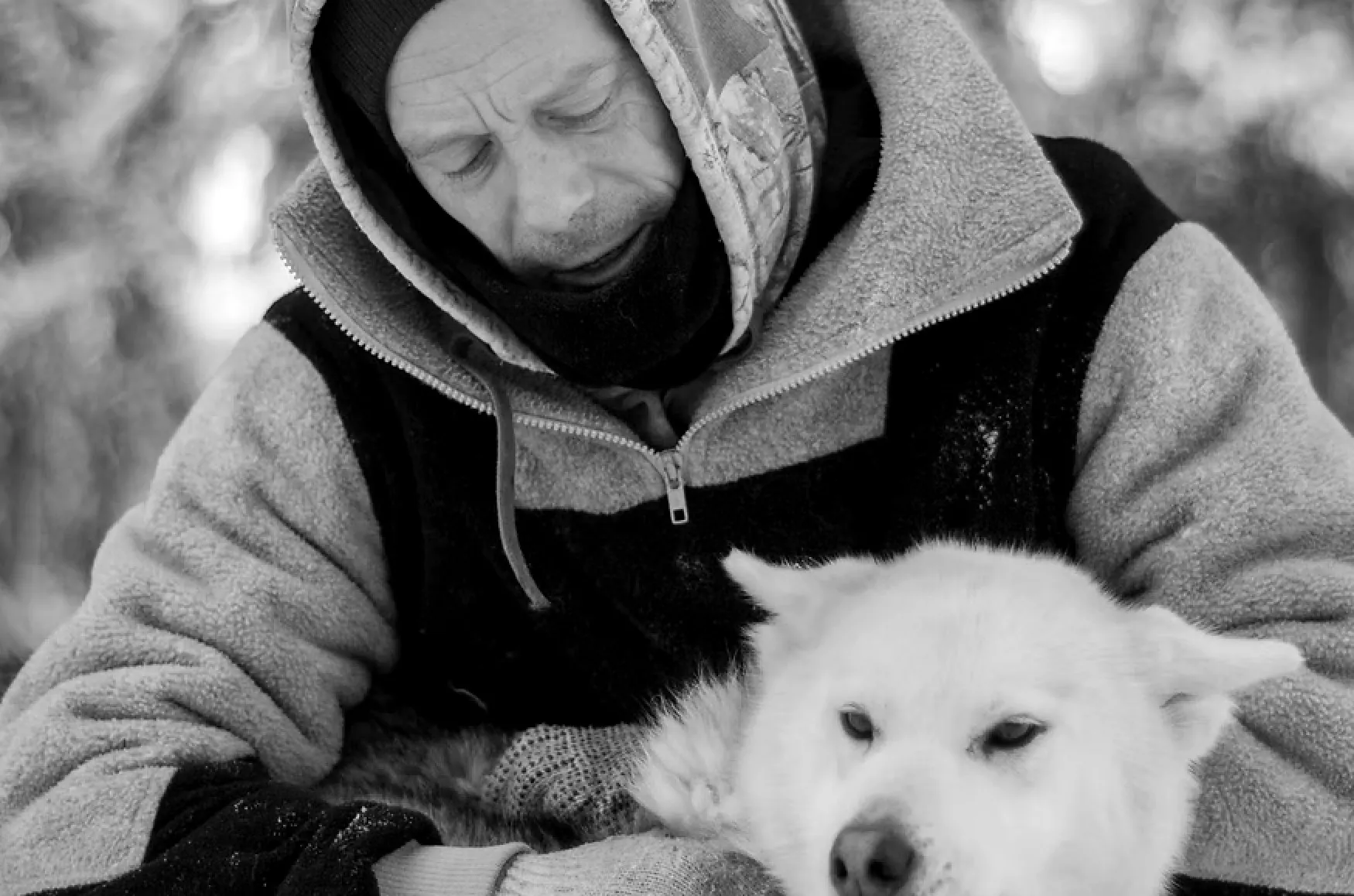
Each dog has a name, a character and a personality of its own. They are welcome in the house, even if most prefer the outdoors.
In winter, the dogs get two meals a day, including a hot soup of ground meat and high-quality kibble.
Our dogs are followed by a veterinary clinic in Whitehorse: regular check-ups, vaccinations and a health check before each season.
We plan the teams every day around each dog’s character and strengths, and we rotate the dogs so that everyone shares the work.
Huskies are made for the cold, but there are limits. Tours are shortened or cancelled below −35 °C (−30 °C with wind).
Our dogs retire around the age of 10, and they stay at home with us. Six retirees currently live at the kennel.
Wherever you go dog sledding, a few questions tell you a lot: How many dogs do you have? Where were they born? Who is your vet? At what temperature do you stop? How do you rotate the teams? What happens to the dogs when they retire? A good kennel will be happy to answer.
It depends on how the dogs are kept. Sled dogs are bred to run and pull, and our huskies howl to go when the harnesses come out. What matters is food, vet care, rest, sensible cold limits and a home for life after retirement. Ours get all of that.
Ours retire around the age of 10 and stay with us at the kennel for life. Six retirees live there today.
On our day tours, each sled is pulled by a team of four to six huskies.
Boreal Kennels
Book online in a few clicks, or write to us to plan a custom trip.